Circularity beyond waste: recovering water and valuable compoundsin wood drying
When we talk about sustainability in industry, we often think of product recycling. But there is another equally strategic lever: making the process itself more efficient, especially in intensive stages such as wood drying, where gases and water vapour are generated.
At Finvalia, this line of work focuses on a simple but powerful idea: making use of what is currently lost in order to reduce resource consumption and, in addition, explore the recovery of compounds with potential added value.
Why is drying an opportunity?
Drying does not only consume energy. It also generates gas streams containing water vapour, which can be recovered, as well as other components originating from the wood. These are present in low concentrations, but are relevant from both a technical and market perspective.
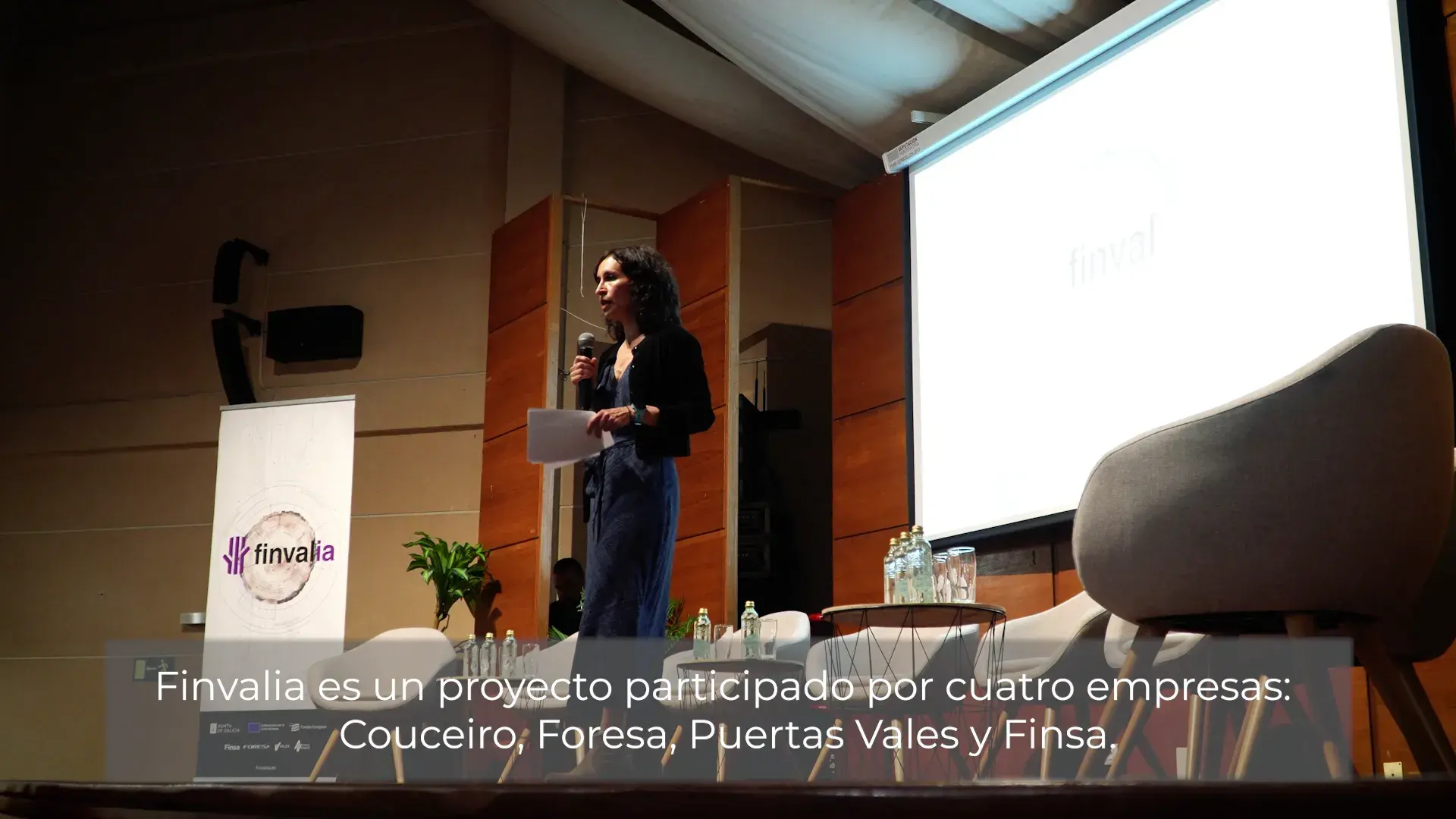
At the Finvalia 2025 event, emphasis was placed on the fact that efficient water use goes beyond environmental concerns. It is also a strategic factor in a context of growing scarcity and increasing regulatory pressure, which may affect future production capacity.
Two complementary approaches within Finvalia
Within Finvalia, the recovery of vapour linked to drying is addressed through two mutually reinforcing lines of work:
1) Recovering water for reuse in processes
The first objective is clear: to recover this water so that it can be used again in operations. This requires one key condition: recovering it at a quality suitable for use, for example in steam production.
The aim is to capture the water under conditions that allow it to be safely and efficiently reintegrated into the process.
2) Using this recovery process to extract high added-value compounds
The second approach opens the door to high-impact circularity: recovering wood-derived compounds present in these drying gases, which may have potential market value.
Here, the work is being approached progressively and realistically:
- Verifying which compounds are present and in what concentrations.
- Understanding how they change with production, for example whether different process settings or conditions have an impact.
- Assessing their economic value and possible recovery routes.
The challenge: accurate identification and quantification under industrial conditions
One of the keys to this line of work is that this is not a perfect laboratory setting. Rather, it involves real, complex samples with a high degree of variability.
During the project sessions, an important learning point was shared: the precise identification and quantification of these compounds can be difficult due to the complexity of the samples and the large number of different compounds present, with a range of between 20 and 30 compounds mentioned. In addition, they appear at low concentrations, in the order of mg/m³, making their separation and identification one of the main challenges.
This type of detail explains why, in industrial sustainability, the path usually begins with measuring properly, continues with understanding variability, and then moves on to designing and validating recovery processes.
What changes if this works?
Without promising results prematurely, the approach points to very tangible benefits at plant level:
- Lower dependence on new water through reuse.
- Greater resource efficiency, with less loss in process streams.
- Better process knowledge through monitoring and characterisation of drying gases.
- And, potentially, a way to valorise by-products, turning a cost or loss into an opportunity.
Overall, this is a form of circularity that does not stop at the end of the product’s life: it acts at the heart of manufacturing.
This line of work fits with the spirit of Finvalia: applying innovation and, where appropriate, intelligence and data so that sustainability is supported by process decisions and measurable improvements.
For more information, read the post where we explain how sustainability is conceived in the factories of the future.